
What Is Neurological Rehabilitation OT, and Why Does It Matter After Stroke or Brain Injury?
Every 20 minutes, someone in Malaysia suffers a stroke. The National Stroke Registry reports over 40,000 new stroke cases annually, with 70% of survivors left with some form of disability. Traumatic brain injury (TBI) adds another 18,000 to 20,000 Malaysians to the neurological rehabilitation pipeline each year.
Neurological rehabilitation occupational therapy retrains the brain-body connection. After a stroke destroys part of the brain, or a TBI scrambles neural pathways, everyday tasks vanish overnight. Brushing teeth. Making teh tarik. Picking up grandchildren. Driving to work. These are not luxuries. These are the building blocks of a dignified life.
A neuro OT does not just exercise your arm. A neuro OT rebuilds your ability to live. They exploit neuroplasticity, the brain’s ability to rewire itself, by repeating meaningful daily activities until new neural pathways form. The earlier this starts, the stronger those pathways grow.
We exist so families across all 16 Malaysian states and territories can find the right neuro OT fast, not after weeks of phone calls and dead-end referrals. We cover every state, including underserved areas in Sabah, Sarawak, Kelantan, and Terengganu where neuro rehab options are scarce.
How Does OT Help After a Stroke?
Stroke kills brain cells. The cells that survive must learn new jobs. OT accelerates that learning by targeting the specific daily activities each patient needs.
Here is what a neuro OT works on after stroke:
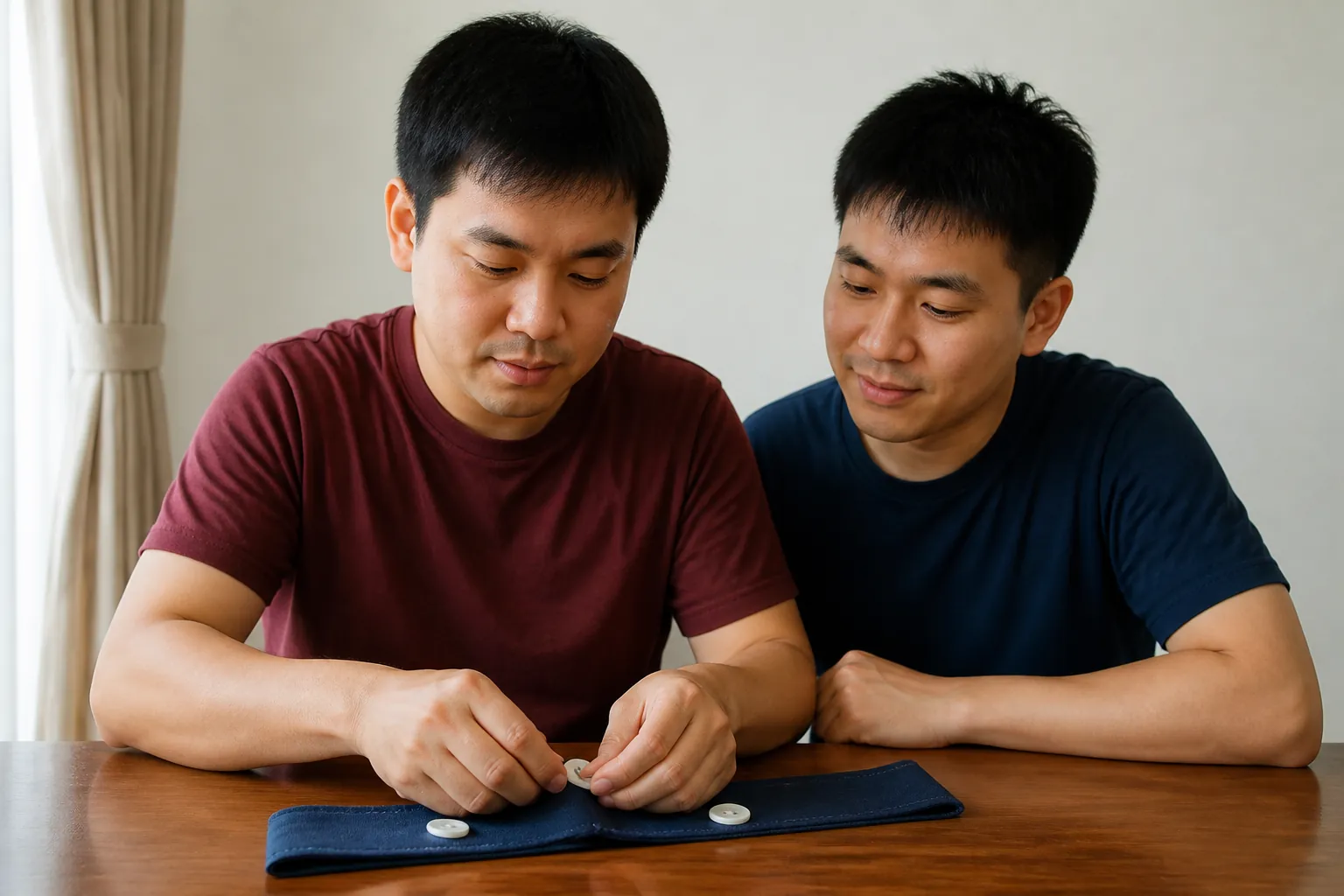
Upper limb retraining. Stroke commonly paralyses one side of the body. OT uses constraint-induced movement therapy, mirror therapy, and task-specific practice to wake up the affected arm and hand. The goal: grip a cup, hold a spoon, button a shirt.
Cognitive rehabilitation. Stroke damages more than muscles. Memory, attention, problem-solving, and sequencing all take hits. OT retrains these skills through real-world tasks, following a recipe, managing medications, handling money at the pasar.
Self-care independence. Bathing, dressing, toileting, grooming. OT breaks each task into achievable steps and introduces adaptive equipment where needed, long-handled sponges, dressing sticks, non-slip mats.
Home and community reintegration. Before discharge, a neuro OT assesses the patient’s home. They recommend grab bars, ramp installations, furniture rearrangement, and kitchen modifications. They practice community skills, taking public transport, crossing roads, shopping at the grocery store.
Return to work. For working-age stroke survivors, OT evaluates job demands and builds a graded return-to-work plan. This includes workstation modifications, energy conservation strategies, and employer education.
A 2023 Cochrane review confirmed that stroke patients who receive OT within the first 4 weeks show 30% greater improvement in daily living activities compared to those who start later.
How Long Does Neurological Rehabilitation Take?
There is no single answer. Recovery timelines depend on stroke severity, patient age, pre-existing conditions, and how early therapy starts. Here is a realistic roadmap based on clinical benchmarks used across Malaysian rehab centres:
Outcome Milestones for Stroke Recovery
Week 2: Stabilisation and Assessment The neuro OT completes a full functional assessment. Baseline scores for self-care, cognition, and upper limb function are recorded. Bedside OT begins, sitting balance, basic self-feeding, simple hand exercises. Family training starts: safe transfer techniques, positioning to prevent contractures.
Month 1: Early Recovery Gains Most patients show measurable improvement in sitting balance and one-handed self-care tasks. Toilet transfers become safer. Basic grooming tasks, face washing, teeth brushing, return with setup help. Cognitive screening identifies specific deficits for targeted rehab.
Month 3: Functional Breakthroughs Patients with moderate stroke typically dress their upper body independently. Kitchen tasks resume with adapted tools. Community outings begin with OT supervision. Driving assessment referral happens here for eligible patients. Many patients transition from inpatient to outpatient OT.
Month 6: Independence Consolidation High-functioning patients return to modified work. Home modifications are completed and tested. Leisure activities resume. The OT develops a long-term maintenance programme and reduces session frequency. Caregiver burden drops significantly as the patient regains autonomy.
For TBI, timelines stretch longer. Moderate-to-severe TBI patients often require 12 to 18 months of OT to address the combined physical, cognitive, and behavioural challenges.
Is Neurological OT Right for You or Your Family Member?
Neurological OT benefits anyone whose brain injury or neurological condition affects daily functioning. Consider neuro OT if your family member:
- Had a stroke (ischaemic or haemorrhagic) and struggles with one-sided weakness or coordination
- Sustained a traumatic brain injury from an accident, fall, or assault
- Lives with Parkinson’s disease and finds daily tasks increasingly difficult
- Has multiple sclerosis with fatigue and coordination problems
- Suffered a spinal cord injury affecting upper limb function
- Experiences cognitive decline after brain surgery or infection
You do NOT need a formal diagnosis to start exploring. If your family member cannot do what they used to do, and the cause traces back to the brain or nervous system, neurological OT can help.
Use our directory to find neuro OTs in your state. Filter by location, language spoken (Malay, English, Mandarin, Tamil), and whether they offer home visits.
What to Expect at Your First Neurological OT Appointment
Walking into a rehab clinic for the first time feels overwhelming. Knowing the steps removes the anxiety.
Step 1: Referral and booking. Your neurologist, rehab physician, or GP writes a referral letter. Some private OT clinics accept self-referrals. Call or WhatsApp to book, most clinics schedule within 3 to 7 days.
Step 2: Initial assessment (60 to 90 minutes). The OT interviews you and your caregiver. They ask about pre-stroke function, current challenges, home setup, work demands, and goals. Then comes hands-on testing, grip strength, range of motion, sensation, balance, cognition, and self-care performance.
Step 3: Standardised outcome measures. The OT administers validated tests like the Barthel Index, Functional Independence Measure (FIM), or Montreal Cognitive Assessment (MoCA). These scores become your baseline.
Step 4: Goal setting. Together, you set SMART goals. Not “get better”, but “button shirt independently within 6 weeks” or “prepare simple breakfast by month 3.” Malaysian OTs increasingly use the Canadian Occupational Performance Measure (COPM) to ensure goals reflect what matters to the patient.
Step 5: Treatment plan and schedule. The OT recommends session frequency (typically 2 to 3 times per week for the first 3 months), treatment approaches, home exercise programmes, and caregiver training schedule. You receive a written plan.
Bring to your first appointment: referral letter, brain scan reports (CT or MRI), hospital discharge summary, medication list, insurance card, and a family member who knows the patient’s daily routine.
OT vs Physiotherapy for Stroke Recovery: What Is the Difference?
Malaysian families often confuse OT and physiotherapy. Both are critical. They are not interchangeable.
| Focus Area | Occupational Therapy (OT) | Physiotherapy (PT) |
|---|---|---|
| Primary goal | Independence in daily activities | Restore movement and physical function |
| Upper limb rehab | Fine motor, hand function, grip, manipulation | Shoulder and arm strengthening, range of motion |
| Lower limb rehab | Functional mobility for daily tasks (getting to bathroom, kitchen) | Walking, balance, stair climbing |
| Cognitive rehab | Memory, attention, problem-solving, safety awareness | Not typically addressed |
| Self-care training | Dressing, bathing, feeding, grooming, toileting | Not typically addressed |
| Home modification | Assessment and recommendations for safe living | Not typically addressed |
| Return to work | Job analysis, workplace adaptation, graded return | Physical capacity evaluation |
| Adaptive equipment | Prescribes and trains use of daily living aids | Prescribes mobility aids (walkers, wheelchairs) |
| Splinting | Custom hand and wrist splints | Not typically addressed |
The bottom line: Physiotherapy gets you moving. OT gets you living. The best outcomes happen when both work together. Ask your neuro rehab team for combined OT-PT programming.
How Much Does Neurological Rehabilitation OT Cost in Malaysia?
Cost remains the number one barrier to accessing neuro rehab in Malaysia. Here are current ranges:
Government Hospital OT
- Cost per session: RM5 to RM30
- Wait time: 2 to 6 weeks for outpatient slots
- Session duration: 30 to 45 minutes
- Availability: All state hospitals, most district hospitals
- Best for: Patients on a tight budget or covered by government schemes
Private Clinic / Rehab Centre OT
- Cost per session: RM150 to RM350
- Wait time: 3 to 7 days
- Session duration: 45 to 60 minutes
- Availability: Concentrated in Klang Valley, Johor Bahru, Penang, Ipoh
- Best for: Patients who need faster access and longer sessions
Home-Visit Neuro OT
- Cost per session: RM200 to RM450
- Wait time: 1 to 2 weeks
- Session duration: 60 to 90 minutes
- Availability: Limited, mainly Klang Valley and major cities
- Best for: Patients who cannot travel or need real-world home-based training
Insurance Coverage
Most Malaysian private insurance plans (Great Eastern, AIA, Prudential, Allianz) cover OT when prescribed by a specialist. Check your policy for:
- Annual rehab therapy limits (typically RM3,000 to RM10,000)
- Per-session caps
- Maximum number of sessions
- Whether home visits are included
SOCSO (PERKESO) covers OT for work-related brain injuries under the Return to Work programme. Government servants access OT through their departmental medical benefits.
Who Are Neurological OTs in Malaysia?
Neurological OTs in Malaysia hold a degree in occupational therapy (minimum Bachelor’s level) and are registered with the Allied Health Professions Council under the Malaysian Allied Health Professions Act 2016. Many pursue additional certifications in:
- Bobath/NDT (Neurodevelopmental Treatment)
- Certified Brain Injury Specialist (CBIS)
- Constraint-Induced Movement Therapy
- Cognitive rehabilitation (ACLS, Dynamic Cognitive Assessment)
- Assistive technology prescription
Malaysia has approximately 2,800 registered occupational therapists. Of these, an estimated 400 to 500 specialise in neurological rehabilitation. The majority practise in the Klang Valley, Penang, and Johor, leaving significant gaps in East Malaysia, the East Coast states, and northern Perak.
We bridge this gap. Our directory covers every Malaysian state, including areas where finding a neuro OT previously meant hours of phone calls to hospitals.
Three Facts Families Should Know About Neuro Rehab in Malaysia
1. The first 90 days are the golden window. Neuroplasticity peaks in the first 3 months post-stroke. Every week of delayed therapy narrows the recovery window. A 2022 study in the Malaysian Journal of Medicine and Health Sciences found that stroke patients who began OT within 14 days had 2.1 times higher odds of achieving independent self-care at 6 months.
2. Repetition drives recovery, but only meaningful repetition. The brain does not rewire from random exercises. It rewires from practising tasks that matter. A neuro OT structures sessions around the exact activities the patient wants to reclaim. Research indicates 400 to 600 task-specific repetitions per session are needed to drive cortical reorganisation.
3. Caregiver training is half the treatment. In Malaysia, 85% of stroke survivors go home to family caregivers, not professional facilities. OT trains caregivers in safe transfers, positioning, feeding techniques, and communication strategies. Families who complete caregiver training report 40% lower caregiver burnout at 12 months.
How to Find the Right Neurological OT in Malaysia
Not every OT is a neuro specialist. Use these filters on our directory:
- Location. Select your state and city. We cover all 16 states and territories.
- Specialisation. Filter for neurological rehabilitation specifically.
- Language. Choose from English, Malay, Mandarin, Tamil, or other languages.
- Setting. Hospital-based, private clinic, or home visit.
- Condition. Filter by stroke, TBI, Parkinson’s, or other neurological conditions.
Read verified clinic profiles, check available services, and reach out directly. If you are unsure where to start, message our team. We help families across Malaysia connect with the right neuro OT, whether you are in Kuala Lumpur or Kota Kinabalu.
Start Your Recovery Today
Every day without neurological OT is a day the brain misses out on rebuilding. The science is clear: early, intensive, task-specific occupational therapy produces better outcomes for stroke survivors and TBI patients.
You do not need to navigate this alone. We are Malaysia’s #1 dedicated OT directory, built so families find the right therapist quickly, understand costs upfront, and know exactly what to expect from day one.
Search our directory now. Or message our team to get matched with a neurological OT in your area.