
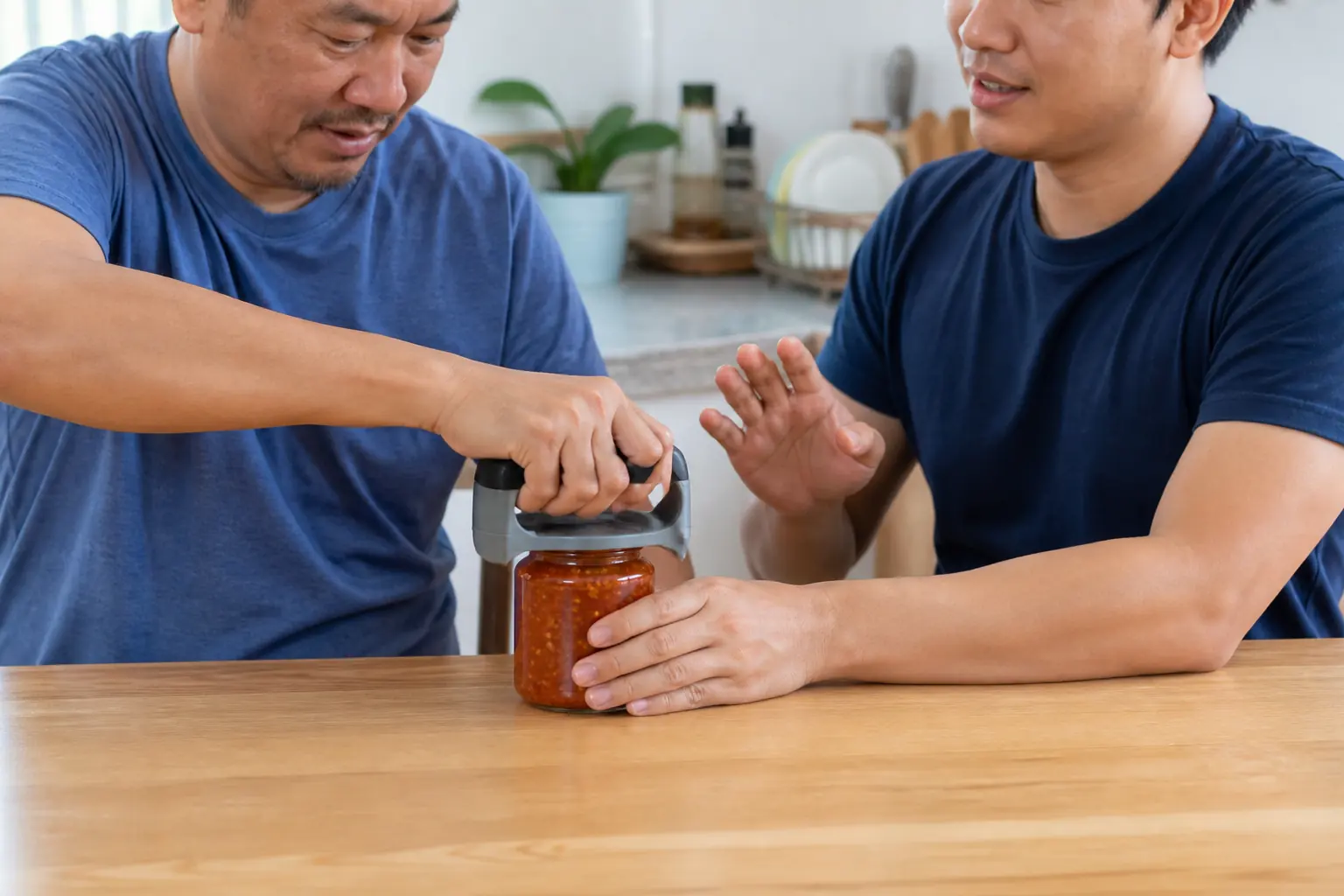
The cast is off. You expected your wrist to work again. Instead, it’s stiff, swollen, weak, and painful. You can’t grip a glass. You can’t turn a doorknob. You can’t type. You can’t cook. The doctor says “it’ll get better with time” and gives you a follow-up appointment in 6 weeks.
That advice, while technically true, costs you months of unnecessary disability. A distal radius fracture (the most common wrist fracture) heals in the cast over 4-6 weeks. But the hand, wrist, and forearm lose 50-70% of their range of motion and strength during immobilisation. Without targeted rehabilitation, full recovery takes 6-12 months of painful self-directed stretching. With OT hand therapy, recovery takes 6-12 weeks.
Distal radius fractures are the most common fracture in adults, affecting approximately 1 in 500 people annually (Journal of Hand Surgery, 2020). In Malaysia, the high motorcycle usage rate and the ageing population with osteoporosis make wrist fractures particularly common.
Cast just came off? OT restores full hand function.
What Happens Inside the Cast
While your bone was healing, your soft tissues were deteriorating:
Joint stiffness: Immobilised joints lose range of motion within days. After 4-6 weeks in a cast, wrist joints, finger joints, and the forearm rotation joints are significantly restricted.
Muscle atrophy: Muscles unused for weeks shrink. Grip strength drops to 20-40% of pre-injury levels.
Tendon adhesions: Tendons that don’t glide during immobilisation develop adhesions, they stick to surrounding tissues, restricting movement.
Swelling: Residual swelling from the fracture compresses joint spaces and restricts movement.
Altered sensation: Compression from the cast or swelling may affect nerve function, causing numbness, tingling, or hypersensitivity.
The OT Rehabilitation Plan
Phase 1: Early Mobilisation (Weeks 0-3 After Cast Removal)
The OT starts immediately after cast removal, not after the 6-week follow-up:
Oedema management (swelling reduction):
- Elevation techniques
- Compression wrapping (Coban wrap)
- Retrograde massage (stroking from fingertips toward elbow)
- Active finger pumping exercises
- Cold application after exercise
Gentle range of motion:
- Wrist flexion and extension within pain-free range
- Forearm rotation (supination/pronation)
- Finger flexion and extension, individual finger movement
- Thumb opposition exercises
- Tendon gliding sequences (5-position exercise, 10 repetitions, 5 times daily)
Scar management (for surgical fractures):
- Scar massage starting at 2 weeks post-surgery
- Silicone scar sheets (RM20-50)
- Desensitisation if the scar is hypersensitive
Phase 2: Progressive Strengthening (Weeks 3-8)
As range of motion improves, strengthening begins:
Grip strengthening progression:
| Week | Activity | Resistance |
|---|---|---|
| 3-4 | Squeezing sponge in water | Minimal |
| 4-5 | Theraputty (soft grade) | Light |
| 5-6 | Theraputty (medium grade) | Moderate |
| 6-8 | Hand gripper, functional lifting | Progressive |
Wrist strengthening:
- Wrist curls with light weight (0.5kg initially)
- Forearm rotation with weighted bar
- Resistance band exercises for wrist flexion/extension
Fine motor retraining:
- Picking up coins from a flat surface
- Turning pages of a book
- Buttoning and unbuttoning
- Writing practice (graded pencil grip exercises)
- Typing on a keyboard (graduated duration)
Phase 3: Functional Retraining (Weeks 8-12)
The OT targets the specific daily tasks you struggle with:
| Task | What the OT Addresses |
|---|---|
| Cooking | Gripping utensils, turning taps, lifting pots, chopping |
| Driving | Steering wheel grip, gear shifting, sustained grip tolerance |
| Typing | Wrist endurance, finger speed, pain management during prolonged use |
| Personal hygiene | Wringing towels, opening containers, hair washing |
| Carrying | Bag handles, grocery bags, children |
| Sports | Racket grip, push-ups, weight training (when cleared) |
Splinting: The OT may fabricate a custom wrist splint for:
- Night wear (to maintain wrist position during sleep)
- Activity protection (wearing during high-demand tasks while strength rebuilds)
- Work use (if returning to manual work before full strength recovery)
Common Complications the OT Watches For
Complex Regional Pain Syndrome (CRPS)
In 5-10% of wrist fractures, the pain system overreacts after cast removal:
- Burning pain disproportionate to the injury
- Extreme sensitivity to touch (can’t tolerate clothing on the hand)
- Swelling that doesn’t respond to standard management
- Skin colour or temperature changes (hand appears red or blotchy, feels hot or cold)
Early detection is critical, CRPS treated within the first 3 months responds much better than late-detected CRPS. The OT screens for CRPS at every session and refers to a pain specialist if signs appear.
Carpal Tunnel Syndrome
Fracture-related swelling can compress the median nerve, causing:
- Numbness in the thumb, index, and middle fingers
- Tingling, especially at night
- Weakness in thumb pinch
The OT monitors nerve function and provides splinting and nerve gliding exercises. If symptoms persist, referral for nerve conduction studies and possible surgical release.
Tendon Rupture
Rare but serious, the extensor pollicis longus tendon (thumb extension) can rupture weeks after a distal radius fracture, even after healing. The OT monitors thumb function and refers immediately if sudden inability to extend the thumb occurs.
Cost of Wrist Fracture OT
| Service | Cost |
|---|---|
| Initial hand therapy assessment | RM 150 – RM 300 |
| Treatment sessions (45-60 min) | RM 120 – RM 200 |
| Custom splint fabrication | RM 80 – RM 250 |
| Home exercise programme | Included |
Typical course: 8-12 sessions over 6-12 weeks. Total cost: RM1,100-2,650.
Without OT: Self-directed recovery takes 6-12 months, with a higher risk of permanent stiffness (20-30% of untreated patients have residual range-of-motion loss at 1 year, per a 2019 Journal of Hand Therapy study).
The Home Exercise Programme
The OT prescribes daily exercises performed 3-5 times per day:
Early phase (10 minutes per session):
- Tendon gliding sequence (5 positions, 10 reps)
- Wrist flexion/extension (hold 10 seconds, 10 reps)
- Forearm rotation (10 reps)
- Finger opposition (touch each fingertip to thumb)
- Fist making (5 repetitions of full fist, release, repeat)
Strengthening phase (15 minutes per session):
- Theraputty exercises (roll, pinch, spread)
- Wrist curls with water bottle
- Grip squeezes (10 reps x 3 sets)
- Functional tasks (buttoning practice, jar opening, key turning)
Consistency matters more than intensity: 5 minutes five times daily beats 25 minutes once daily.
Frequently Asked Questions
How soon after cast removal should I start OT? Immediately, within the first week. The first 2-3 weeks after cast removal are the window of maximum recovery potential. Waiting 6 weeks for the follow-up appointment wastes the best rehabilitation window.
Do I need OT if my fracture was treated with surgery (plate and screws)? Especially if surgically treated. Surgical fractures often start rehabilitation even before full bone healing (under surgeon protocol), because the plate provides internal stability. Post-surgical OT typically begins 1-2 weeks after surgery.
My wrist still hurts 3 months after the fracture. Is this normal? Mild discomfort during activity is normal for up to 6 months. Significant pain, increasing pain, or pain at rest at 3 months is not normal, request an OT assessment and medical review. It may indicate CRPS, hardware irritation, or a complication.
The Bone Healed. Your Hand Didn’t.
The cast fixed the bone. OT fixes the hand. Without rehabilitation, a healed wrist fracture leaves you with a stiff, weak hand that takes months to recover on its own, if it fully recovers at all. Eight sessions of OT gets you back to function in weeks, not months.
Chat with us on WhatsApp to find a hand therapy OT, anywhere in Malaysia.