
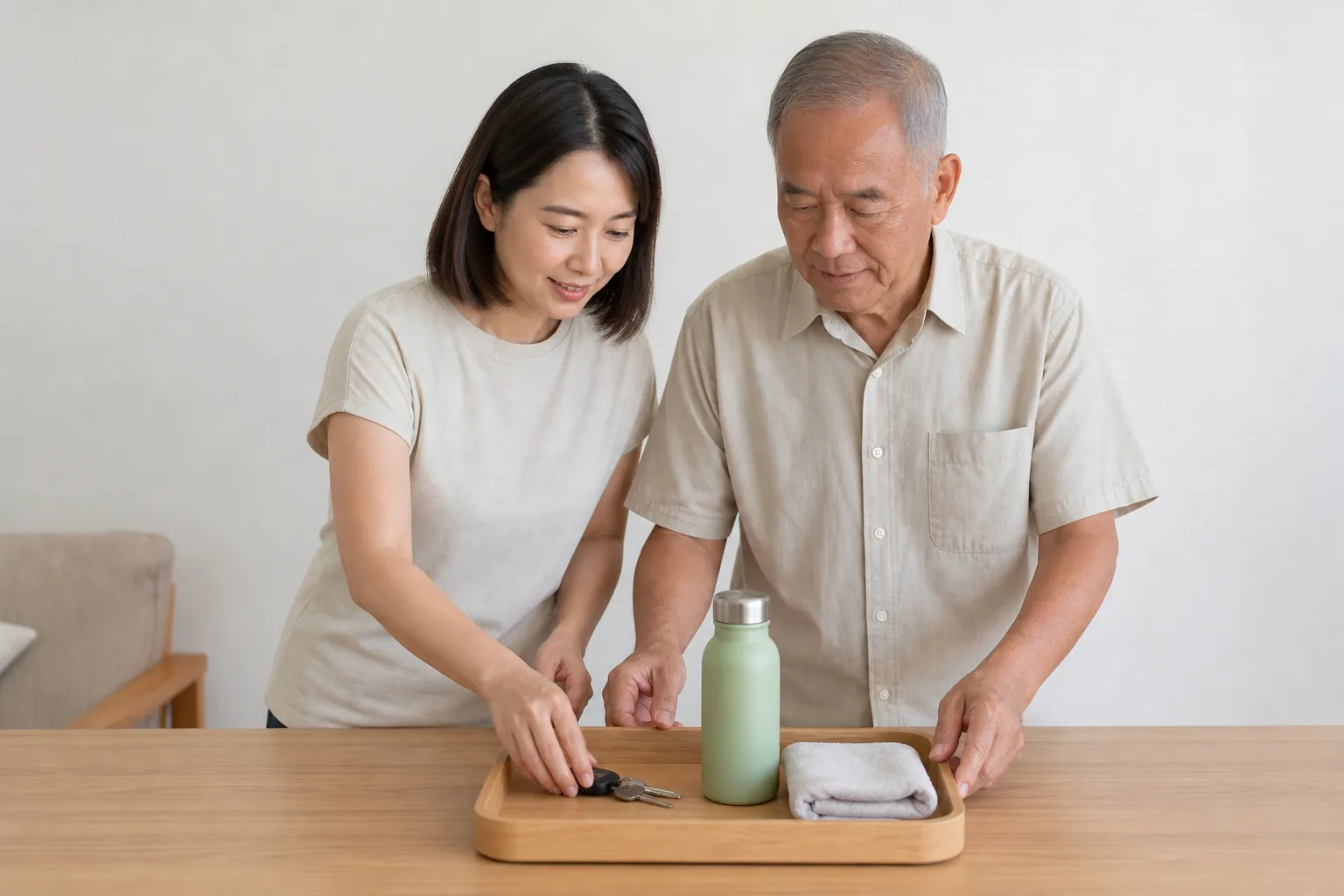
The first time a registered occupational therapist steps through your front door, it does not look like a clinic. There is no waiting room, no treatment couch, no flashcards in a plastic tray. The OT is in your actual kitchen, your actual bathroom, your child’s actual bedroom. That is the point. Most of what a family or an individual is trying to fix is stubbornly tied to the rooms and routines of the real house, and the best programmes come from seeing those rooms in use.
This is what a first home visit in Malaysia actually looks like, the questions an OT asks, what they observe, what they leave you with, and what changes between visits.
Why the home visit exists as its own thing
Clinic OT works well when the goal is tied to a clinic environment: hand-therapy splinting, structured sensory-integration sessions, grip strengthening with specialist tools, or driving assessments on a simulator. That work needs equipment and a setup that is not reproducible at home.
Home-visit OT works for everything else, and in Malaysia that is most of the caseload: paediatric handwriting and sensory regulation, post-stroke transfers, dementia care planning, bathroom and bedroom modifications, fall-prevention for older parents, daily-routine design for a teenager with autism, or return-to-life-after-hospital for an adult recovering from surgery. The therapist sees what is actually there, the height of the bed, the lip on the bathroom door, the grip on the stair rail, the table where homework happens, and the programme reflects the real environment, not an idealised one.
Before the visit: what to have ready
A good home-visit OT will send a short WhatsApp message or email before the first appointment with a handful of questions. Common ones:
- A brief history, what prompted the referral, any diagnoses, previous therapy, medications affecting attention or movement.
- What a typical day looks like for the person the visit is for, wake-up routine, meals, school or work, evening, sleep.
- Who else is at home during the visit. Family members or a carer who assists with daily tasks should ideally be present, at least briefly, because the OT will want to observe the task the way it usually happens.
- Any specific concerns from a doctor, teacher, or occupational physician, photocopies of reports are helpful if available.
You do not need to tidy the house. The therapist is specifically looking at the environment as it actually is. A bathroom that has been scrubbed spotless does not show the grime line on the floor tile that tells them where the last slip might have happened.
The first hour: what the OT actually does
The first visit typically runs sixty to ninety minutes. It moves quickly once the therapist is in the door, and it follows a recognisable rhythm.
The first ten minutes are conversation. The OT sits down with the person the visit is for, and usually with a family member or carer, and runs through history, goals, and what “better” would look like in concrete terms. “Walking better” is re-expressed as “getting from the bedroom to the kitchen without holding the wall.” “Handwriting” becomes “finishing a page of homework in thirty minutes without pain.” Vague goals do not drive a useful programme; specific ones do.
The next thirty to forty-five minutes are observation. The OT asks to see the tasks the family has described as difficult, done the way they are normally done. For a child, that might mean watching them do ten minutes of homework at the usual table, or seeing how they get dressed, or watching them play with a toy that usually triggers a meltdown. For an adult post-stroke, it might be transferring from bed to chair, walking to the bathroom, brushing teeth, making a cup of tea. The therapist watches, asks small questions, occasionally asks for a repeat with a small change, and takes notes.
The final ten to fifteen minutes are the write-up and handover. The OT tells you what they saw, what they think is going on, and what the next six to twelve weeks might look like. You leave with either a written plan on the spot or a promise of one in 48 hours, plus two or three small things to start doing immediately. Not a six-page manual. A simple, specific plan that the family can run.
What the OT is looking at, that you might not notice
Home-visit OTs are trained to see environmental details that most families have stopped noticing. A non-exhaustive list:
- Floor transitions. The small lip between the living room tile and the kitchen tile is a common fall point for older adults and a tripping hazard for children with coordination difficulties.
- Light. A dim corridor between bedroom and bathroom is a leading cause of night falls for older parents. Simple motion-sensor lights often make a bigger difference than physiotherapy exercises.
- Grip. Door handles, tap handles, grab bars, stair rails, every point where a hand closes on something is a candidate for a change. Rheumatoid arthritis and post-stroke weakness turn round doorknobs into daily frustrations.
- Height. The height of the bed, the height of the dining chair, the height of the kitchen counter. Transfers and daily tasks are built around heights; mismatched heights cause back pain, falls, and abandoned routines.
- The place where work happens. For a child, it is the homework desk. For a WFH adult, it is the dining table being used as a workstation. For a knitting grandmother, it is her favourite chair. That place is where the OT watches the task, not a mock setup in a clinic.
Between visits: what changes
A home-visit OT programme is not a series of one-off sessions. It is a sequence with a direction. Typical cadence:
- Weeks 1-4: weekly visits. The first three or four sessions establish the baseline, introduce the programme, and catch anything that is not working.
- Weeks 5-10: fortnightly visits. By now the family is running the programme day-to-day. The OT comes in to adjust, progress goals, and handle new issues.
- Weeks 11+: monthly visits or a discharge review. Most cases reach a natural end point somewhere between three and six months. Some, dementia progression, slow-recovery strokes, complex paediatric cases, continue on a monthly rhythm for longer.
Between visits, the family is doing the work. The OT is designing, observing, and adjusting. That is the trade: the home-visit OT is not present every day, which means the programme has to be something that the family can realistically run on a Tuesday evening between homework and dinner. If a programme is unrealistic, that is a programme design failure, not a family compliance failure. A good OT re-designs rather than blaming.
What home-visit OT costs in Malaysia
Private home-visit OT in Malaysia typically costs RM180 to RM400 per session, depending on seniority, specialty, and distance from the therapist’s usual catchment. First assessments are usually at the higher end of the range because they take longer and involve more write-up. Travel surcharges for addresses outside the standard catchment are disclosed before the first booking, not after.
Government-hospital OT is heavily subsidised at roughly RM5 to RM30 per visit but is delivered on-site at the hospital, not in the home, and comes with longer waiting lists. A common pattern Malaysian families use is to book private home-visit OT for the active six-to-twelve-week programme and keep the public-hospital route for specialist inputs, hand surgery follow-up, paediatric developmental assessment, post-stroke re-assessment, that the hospital is better set up to deliver.
Receipts are standard and support insurance claims. Where the person qualifies, Section 46 tax relief up to RM10,000 per year covers medical treatment of the taxpayer, spouse, or child with a certified disability.
When home-visit OT is the wrong choice
It is worth being honest about where home-visit OT is not the right fit:
- Acute hand or post-surgical cases that need splinting, structured strengthening, and scar management are usually better served clinic-side.
- Driving rehabilitation needs a simulator and on-road assessment that no home can provide.
- Group programmes, aquatic OT, some paediatric social-skills groups, structured sensory-integration sessions, need a prepared environment.
- Specialist equipment fitting, a pressure-relief wheelchair cushion, a powered standing frame, is clinic work, not home-visit work.
For everything tied to the real house and the real daily routine, the home visit is the default. For everything tied to equipment or prepared environments, the clinic is the default. Most Malaysian OT programmes blend both, a first visit at home, follow-ups at whichever location fits the day’s goal.
How to start
WhatsApp us with your address and a short description of what you are looking to work on, handwriting, post-stroke recovery, home safety for an older parent, workplace ergonomics, whatever it is. A registered OT who covers your area will reply, usually within a day, with availability and a rounded session fee for your postcode. Most first visits are booked within the week.