
Your husband had a stroke 3 weeks ago. The hospital discharged him with a bag of medications, a follow-up appointment in 2 months, and the advice to “continue rehabilitation at home.” Nobody taught you how.
Now you’re lifting a 75kg man from the bed to a wheelchair using a technique you invented yourself. Your back already hurts. You’re washing him in a bathroom with no grab bars, both of you terrified of a fall. He can’t dress himself, so you dress him, guessing which arm goes in first. He gets frustrated. You get frustrated. He says he’d rather die than be a burden. You cry in the shower where he can’t hear you.
There are approximately 40,000 new strokes per year in Malaysia (National Stroke Registry). Of stroke survivors who return home, 50-70% need a caregiver for some level of daily assistance. In most Malaysian families, the spouse becomes the primary caregiver, overnight, untrained, unprepared, and unsupported.
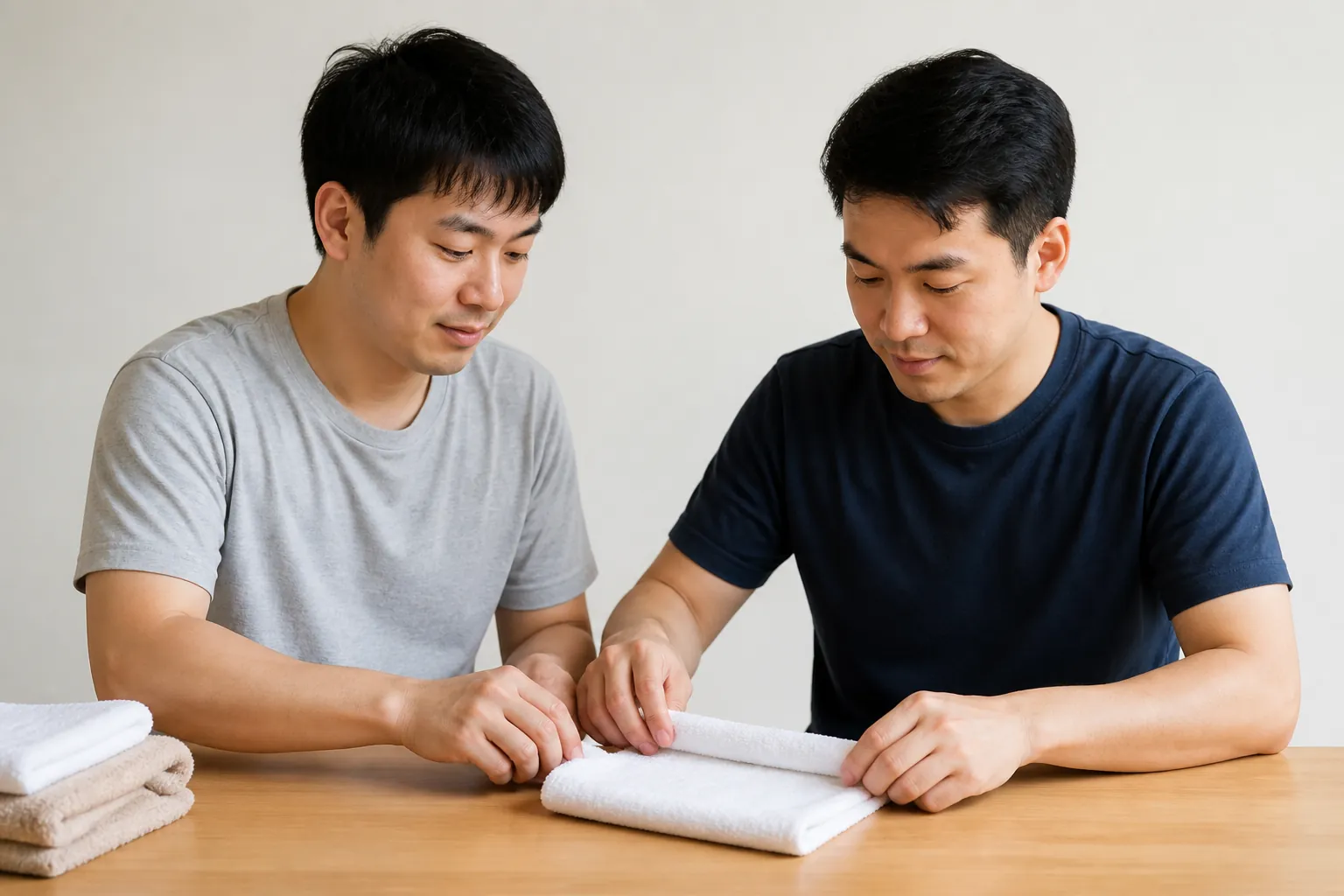
An OT serves both of you: teaching the stroke survivor to do as much as possible independently, and teaching you to assist safely with the rest.
Caring for a stroke survivor? OT helps both of you.
What the OT Teaches You (The Caregiver)
1. Safe Transfers
Transfers, moving your spouse from bed to wheelchair, wheelchair to toilet, toilet to shower, are the highest-injury-risk activity for caregivers. Incorrect technique causes back injuries, falls, and both of you on the floor.
Bed to wheelchair transfer (affected side):
- Position wheelchair at 45-degree angle to the bed, on the stronger side
- Help your spouse sit at the edge of the bed, feet flat on the floor
- Stand in front, slightly to the weaker side
- Your spouse pushes up with the strong arm while you guide the hips
- Pivot on the feet (not lifting, pivoting) toward the wheelchair
- Lower into the wheelchair controlled by the strong leg
The OT teaches you this in person, practises with you multiple times, and corrects your technique. Getting this right prevents caregiver back injury, the most common reason caregivers themselves end up needing medical care.
2. Home Modifications
The OT visits your home and assesses every room your spouse will use:
Bathroom (highest risk area):
- Grab bars next to toilet and inside shower (RM50-200 per bar, installation RM50-100)
- Shower chair or bench (RM100-300)
- Handheld shower head (RM30-100)
- Non-slip mats inside shower and on bathroom floor (RM20-50)
- Raised toilet seat if your spouse can’t lower to standard height (RM80-200)
Bedroom:
- Bed height adjustment (add blocks to raise, or lower if too high), transfer height should match wheelchair seat height
- Bed rail on the affected side to prevent rolling out (RM100-300)
- Clear path from bed to bathroom (remove rugs, ensure lighting)
Living areas:
- Remove trip hazards: loose rugs, cables, low furniture
- Rearrange furniture for wheelchair or walker access
- Install nightlights along commonly used paths
Total home modification cost for a typical Malaysian home: RM500-2,000. This is far cheaper than a single hospital admission from a fall (RM3,000-15,000+).
Find a stroke rehabilitation OT
3. Assisting Without Doing Everything
The biggest caregiver mistake: doing everything for the stroke survivor. It’s faster, easier, and avoids the frustration of watching them struggle. But every task you do for them is a task they lose the ability to do for themselves.
The OT teaches you the “assist, not replace” principle:
| Task | Instead of Doing It for Them | Assist Like This |
|---|---|---|
| Dressing | Don’t dress them completely | Set up clothes, guide affected arm into sleeve, let them finish with strong arm |
| Eating | Don’t feed them | Provide adapted utensils, cut food, let them self-feed at their pace |
| Bathing | Don’t wash everything | Set up the shower chair and supplies, assist only with the areas they can’t reach |
| Walking | Don’t use a wheelchair for every distance | Walk with them using a walker for short, safe distances |
This is harder emotionally than doing everything. Watching your spouse struggle to button a shirt for 10 minutes is painful. But those 10 minutes are rehabilitation, every struggle rebuilds neural pathways.
4. Communication Strategies
If your spouse has aphasia (language difficulty after stroke):
- Speak slowly, in short sentences
- Ask yes/no questions instead of open-ended ones
- Give one instruction at a time
- Use gestures and pointing alongside words
- Wait, give them 10-15 seconds to respond before repeating
- Don’t finish their sentences unless they signal they want you to
5. Caregiver Self-Care
The OT addresses your wellbeing too:
- Body mechanics training: Proper lifting, bending, and reaching techniques to protect your back
- Respite planning: Identifying who else can provide care so you get breaks (family rotation, paid caregiver for specific hours)
- Sleep protection: Strategies for getting adequate sleep when your spouse needs nighttime assistance
- Your own health: Referral for support if you’re experiencing anxiety, depression, or physical health decline from caregiving demands
The First Month Timeline
| Week | What the OT Focuses On |
|---|---|
| Week 1 | Home assessment, essential safety modifications, transfer training |
| Week 2 | Bathing and toileting techniques, adapted dressing, caregiver body mechanics |
| Week 3 | Kitchen safety, meal preparation modifications, wheelchair management |
| Week 4 | Community access (getting in/out of car, navigating public spaces), review and adjust |
Cost
| Service | Cost |
|---|---|
| Home assessment (60-90 min) | RM 200 – RM 400 |
| Treatment sessions (at home or clinic) | RM 120 – RM 250 |
| Caregiver training session | RM 120 – RM 200 |
| Equipment prescription and sourcing | Included |
Recommended: 8-12 sessions over 3 months. Total OT cost: RM1,200-3,000. Home modification equipment: RM500-2,000 additional.
Frequently Asked Questions
When should OT home visits start after hospital discharge? Within the first week. The first few days at home are the most dangerous, you’re learning everything on the fly, and fall risk is highest before modifications are in place.
Can a domestic helper replace the caregiver? A helper can assist with physical tasks, but they need training too. The OT can train your helper on safe transfers, positioning, and assisted self-care techniques. An untrained helper can inadvertently increase injury risk.
How long will I need to be a caregiver? It depends on the stroke severity. Some stroke survivors regain full independence within 3-6 months. Others need long-term assistance with some tasks. The OT gives you an honest functional prognosis and adjusts the care plan as recovery progresses.
You Didn’t Train for This Job. Let an OT Train You.
Caring for a stroke survivor is physically demanding, emotionally draining, and technically complex. An OT gives you the skills to do it safely, the knowledge to promote independence, and the support to protect your own health while caring for someone you love.
Chat with us on WhatsApp to get caregiver training and a home assessment, anywhere in Malaysia.