
Hand-Eye Coordination
Using vision to guide hand movement, threading a needle, catching a ball, pouring a glass of water.
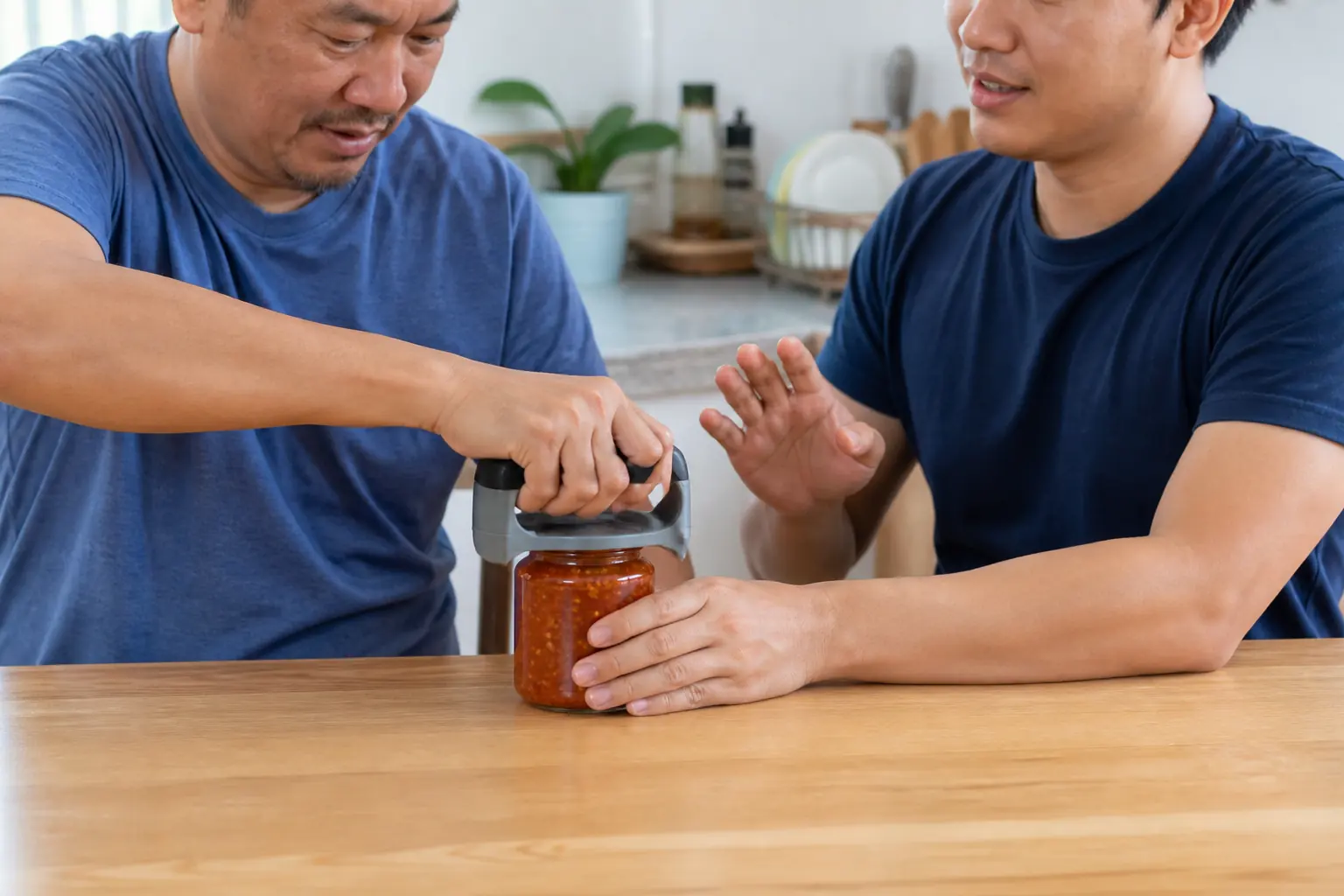
Hand-eye coordination is the functional partnership between what you see and what your hands do. It is a subset of visual-motor integration that specifically refers to real-time hand control guided by vision. This skill is essential for self-feeding with utensils, dressing with buttons and zips, sports, handwriting, scissor use, catching a ball, copying from the board, pouring water, and many school-based tasks. In children, weak hand-eye coordination may show up as messy handwriting, poor spacing, frequent spills, difficulty colouring inside boundaries, avoiding ball games, slow copying, or frustration with craft work. In adults, it can affect cooking, keyboard use, tool handling, driving confidence, and return-to-work tasks after stroke, brain injury, hand injury, or neurological illness. OTs assess it through activities like ball-catching, block-stacking, peg-boarding, bead threading, tracing, cutting, handwriting trials, and functional tasks chosen from the person's real routine. Treatment is usually graded: the OT starts with achievable visual-targeted movements, then increases speed, accuracy, distance, background distraction, or task complexity. For a child, that might mean moving from large peg boards to pencil control and classroom copying. For an adult, it might mean practising safe kitchen tasks, work tools, or computer tasks in a structured way. The aim is not just better test scores; it is smoother, safer participation in daily life.