
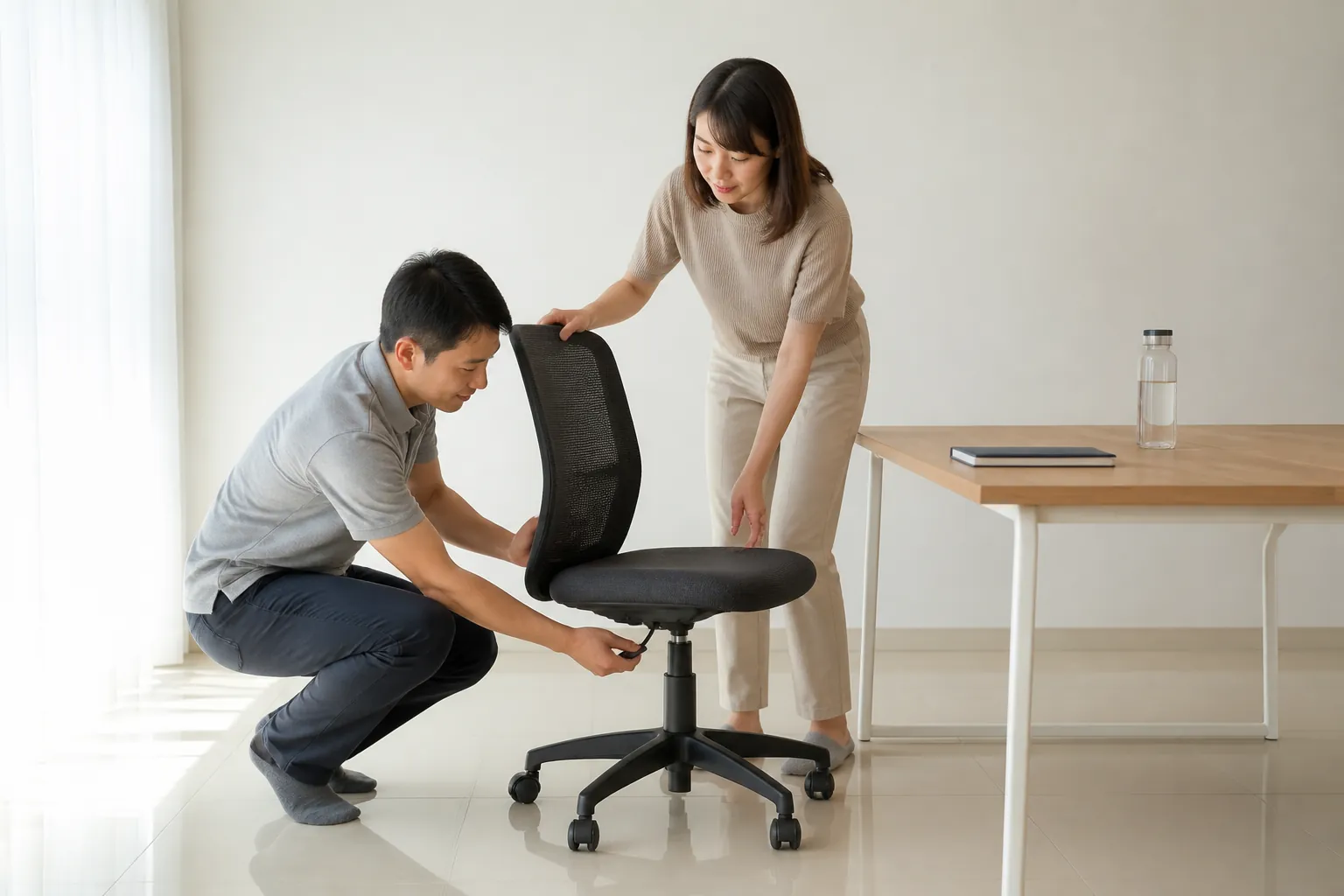
Your chair is too low. Your monitor is too high. Your keyboard forces your wrists into a position that, repeated 8 hours a day for 5 years, will produce carpal tunnel syndrome. You know your set-up isn’t right because your neck hurts by 3pm and your lower back protests every time you stand up from your chair.
You’ve tried adjusting things yourself. You watched a YouTube video. You bought a lumbar pillow from Shopee. Nothing fixed it, because ergonomics isn’t about buying one product. It’s about understanding how your specific body interacts with your specific workspace and adjusting every variable until the system works.
An occupational therapist trained in workplace ergonomics does exactly this. And the cost, RM200-500 for an individual assessment, is less than a single specialist visit for the chronic pain you’ll develop without it.
In pain at your desk? Get an ergonomic assessment.
Why Ergonomic Problems Are Worse in Malaysia
Malaysian offices have a specific combination of problems that make ergonomic injuries more common:
Shared workstations. Hot-desking and shared computers mean furniture isn’t adjusted for any individual. A 155cm woman and a 180cm man use the same desk and chair at different shifts. Neither is positioned correctly.
Imported furniture. Office furniture designed for European or American body dimensions doesn’t fit the average Malaysian frame. Standard desk heights of 73-75cm suit a person around 175cm tall. The average Malaysian adult is 164cm (male) and 153cm (female), according to the Department of Statistics Malaysia.
Air conditioning culture. Malaysian offices are kept at 22-24°C. Cold temperatures increase muscle tension and reduce blood flow to extremities, contributing to repetitive strain injuries. Workers who are cold tend to hunch their shoulders, a posture that directly loads the neck and upper back.
Long working hours. Malaysia ranks among the longest working hours in Asia, with an average of 40.3 hours per week according to DOSM 2023 data. Many office workers exceed this, spending 9-10 hours at their desk daily.
Car commute compounding. Unlike cities with strong public transport, most Malaysian workers drive 30-90 minutes each way. Driving posture loads the same muscles that desk work does, meaning many workers have zero postural recovery between the car and the desk.
What an OT Ergonomic Assessment Covers
Individual Assessment (45-60 Minutes)
The OT evaluates your complete workspace interaction:
Chair setup:
- Seat height: Feet flat on floor, knees at 90-100 degrees
- Seat depth: 2-3 finger gap between seat edge and back of knees
- Backrest: Supporting the lumbar curve, not pushing you forward
- Armrests: Elbows at 90 degrees, shoulders relaxed, not hiked up
Desk and monitor:
- Monitor height: Top of screen at eye level (most monitors in Malaysian offices are too low or too high)
- Monitor distance: Arm’s length, if you can touch the screen, it’s too close
- Desk height relative to elbow height (most Malaysian workers need the desk lower or the chair higher, then a footrest to compensate)
Keyboard and mouse:
- Keyboard position: Elbows at 90 degrees, wrists neutral
- Mouse placement: Next to keyboard, not reached forward
- Wrist angle: Neutral, not extended, the number one preventable cause of carpal tunnel
Work habits:
- Break frequency: The OT observes how long you work without moving
- Phone use: Cradling a phone between ear and shoulder while typing
- Posture patterns: Which compensatory positions you default to when fatigued
Body-specific factors:
- Existing pain or injuries that affect positioning
- Vision (uncorrected vision problems cause forward leaning)
- Dominant hand and mouse-hand habits
Corporate Assessment (Multiple Workstations)
For companies, the OT assesses multiple workstations and provides:
- Department-wide risk analysis
- Prioritised modification list by risk level
- Equipment specifications for purchasing
- Staff training on self-adjustment
- Follow-up compliance checks
Find an OT for workplace ergonomics
Common Fixes and Their Costs
| Problem | Fix | Cost |
|---|---|---|
| Monitor too low | Monitor arm or riser | RM 30 – RM 300 |
| Chair doesn’t fit body | Replacement ergonomic chair or adjustment | RM 300 – RM 1,500 |
| Feet don’t reach floor | Footrest | RM 30 – RM 100 |
| Wrist extension at keyboard | Keyboard tray or negative tilt keyboard | RM 50 – RM 400 |
| No lumbar support | Lumbar roll (not a pillow, a roll) | RM 20 – RM 80 |
| Mouse too far from body | Compact keyboard or mouse platform | RM 50 – RM 200 |
| Glare on screen | Monitor repositioning or anti-glare screen | RM 0 – RM 100 |
Average cost to fix a workstation: RM150-500. Average cost of treating chronic neck pain for a year: RM2,000-8,000 in specialist visits, physiotherapy, and medications.
The Business Case for Employers
Malaysian employers lose an estimated RM2.8 billion annually to musculoskeletal disorder-related productivity loss, according to NIOSH Malaysia. The Occupational Safety and Health Act 1994 requires employers to ensure employee safety, ergonomics falls under this mandate.
Cost comparison per employee:
- Ergonomic assessment + modifications: RM300-800 (one-time)
- One MC day: RM150-400 in lost productivity
- Treatment for work-related musculoskeletal injury: RM2,000-10,000
- SOCSO claim for occupational disease: Affects employer’s contribution rate
Companies that invest in ergonomic programmes see 40-60% reduction in musculoskeletal complaints within 12 months, according to a systematic review in Applied Ergonomics (2020).
What an OT Does That YouTube Doesn’t
You’ve seen the “perfect desk setup” videos. They show a generic ideal. The problem: your body isn’t generic.
An OT accounts for:
- Your height and proportions (arm length, torso length, leg length, they’re not all proportional)
- Your existing injuries (a previous shoulder injury changes optimal mouse position)
- Your actual tasks (data entry requires different positioning than design work or video calls)
- Your specific chair (not every chair adjusts the same way, the OT works with what you have)
- Your budget (the OT recommends RM30 fixes before RM300 ones)
Frequently Asked Questions
Can my employer be required to pay for an ergonomic assessment? Under OSHA 1994, employers must provide a safe workplace. While the law doesn’t specifically mandate ergonomic assessments, an employee who develops a work-related musculoskeletal disorder can file a SOCSO claim. Smart employers invest in prevention. Many OTs offer corporate rates: RM100-200 per workstation for bulk assessments.
I work from home. Can I get an ergonomic assessment? Yes. Home-visit OTs conduct assessments at your actual desk, couch, or dining table, the place where the pain is happening. Home offices are typically worse than corporate offices; dining tables, beds, and sofas are not workstations. A home assessment costs RM200-400 and is worth every ringgit if you work from home more than 3 days per week.
How often should workstations be reassessed? Every 12-18 months, or immediately after a change in role, equipment, or health status. If you start experiencing new pain, request a reassessment, don’t wait for the schedule.
Your Pain Has a Cause. The Cause Has a Fix.
Desk pain isn’t inevitable. It’s the result of a mismatch between your body and your workspace, a mismatch that an OT identifies in under an hour and fixes for less than the cost of a new phone.
Chat with us on WhatsApp to find an OT for workplace ergonomics, anywhere in Malaysia.